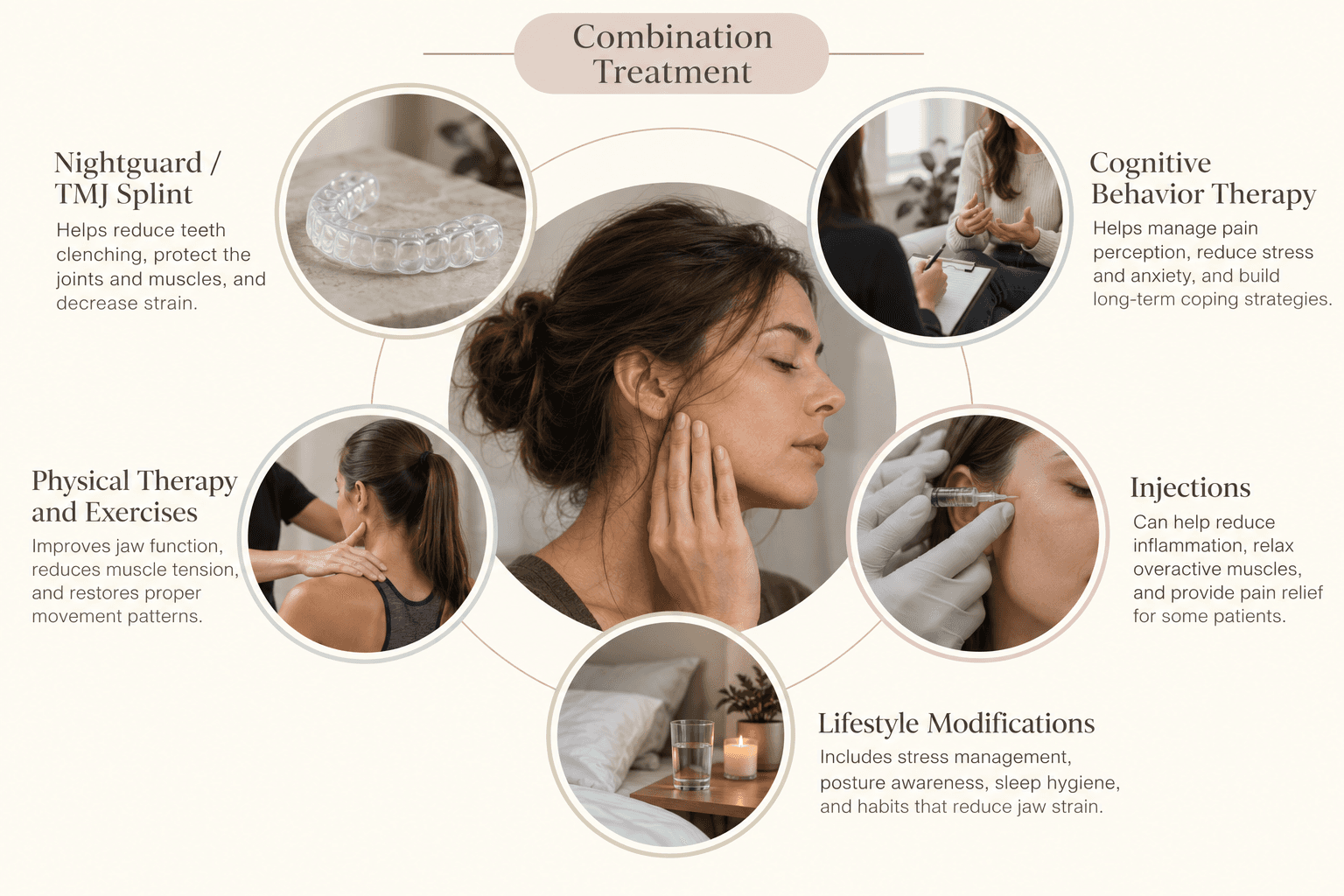
How Come Does Combination of Treatment for TMJ Issues / TMD Work Better?
TMJ disorders often involve the jaw joints, muscles, nerves, habits, and related conditions. Learn why combining appropriate therapies can help address the full picture of TMD care.
Many patients don’t realize how long their TMJ problem has been developing. What may seem like occasional jaw clicking, clenching, headaches, facial pain, or jaw tightness can gradually become more persistent as the body adapts to the problem.
By the time patients see an orofacial pain specialist, they may have been dealing with symptoms for months or even years. At that point, several factors may be contributing to their pain, not just the jaw joint itself.
Imagine you strain one muscle in your leg. You start walking differently to avoid the pain. Then another muscle becomes tight, your posture changes, and eventually your back starts hurting. Treating only your back may not solve the original problem.
TMJ problems can develop in a similar way. The jaw may start with a small issue, but over time the muscles, joints, nerves, headaches, and surrounding structures can become involved. By the time you see a specialist, we may need to address several layers of the problem, not just the original symptom.
Understanding TMD’s Many Contributing Factors
Recent research shows that TMDs are complex, multifactorial conditions. Factors that may contribute to the development and persistence of TMDs can be understood through a biopsychosocial model, which considers biological, psychological, and social factors.
Biological Factors
Age, sex, and genetics
Physiology
Illness or disability
Inflammation
Medication effects
Biomechanics
Psychological Factors
Learning and memories
Avoidance behaviors
Stress
Appraisals of pain
Social Factors
Cultural and environmental factors
Interpersonal relationships
Work environment
Economics and access to care
Our goal is to identify the different factors contributing to your symptoms, address them step by step, and create a treatment plan that helps make your symptoms more manageable or eliminate the pain.